A dark observing location can look surprisingly bright when the Moon is up. Before moving your trip to a more distant site, check whether moonlight is the reason. For stargazing, the useful question is not simply which phase appears on the calendar: it is whether the Moon will share the sky with your target during the hours you can observe.
Why the Moon changes the view
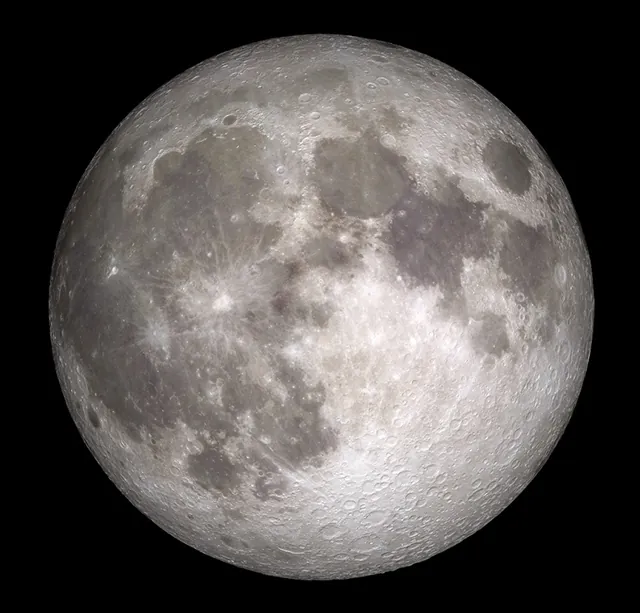
Moonlight is reflected sunlight, rather than light produced by the Moon. A full Moon can cast distinct shadows on the ground. That natural illumination is separate from artificial light pollution, so driving away from a city does not remove it. See NASA’s explanation of moonlight.
The National Park Service recommends new Moon, the period before moonrise or the time after moonset for seeing more stars. Use those opportunities when faint-sky detail is the purpose of your trip. See NPS: Stargazing 101.
Read the phase, then check the clock
The illuminated percentage describes the portion of the Moon’s visible disk lit by the Sun. First and last quarter are about 50 percent illuminated; they do not mean that only one quarter of the visible disk is bright. Near full Moon, the disk can appear almost full on adjacent nights as well. The U.S. Naval Observatory’s phase guide explains these distinctions.
A percentage alone cannot tell you whether the Moon is above your local horizon at 10 p.m. Look up rise and set times for your actual location and date. The USNO daily Sun and Moon service provides location-based rise, set, phase and illumination information. Check the time-zone selection when comparing it with your plans.
Find the overlap that matters
- Write down your available observing hours, including setup and departure.
- Compare those hours with the local moonrise and moonset times.
- Check the astronomical darkness window, rather than assuming sunset immediately brings the darkest sky.
- Confirm that your intended target is visible during the remaining interval.
- Check clouds and permitted nighttime access before committing to the trip.
For example, imagine you are free from 9 p.m. until midnight and the Moon rises at 11 p.m. The earlier part of that session is the interval to investigate for faint targets. Those times are an illustration, not a prediction for any location. If darkness begins late or your target only becomes visible near midnight, that apparent two-hour opportunity may be much less useful.
Keep an alternative plan for bright nights
You do not need to cancel every outing with a bright Moon. Change the purpose: learn a few constellations, practice setting up equipment, or make the Moon the subject of the session. Separate an equipment practice evening from a trip specifically intended to capture faint Milky Way detail. Our Milky Way conditions guide covers the other planning decisions.
Record Moon timing alongside the location, weather and local lamps when comparing visits. Avoid blaming a map estimate for a difference caused by your observing window. Light Pollution Map can help you compare potential sites; pair that comparison with Moon information and our dark-sky location checklist to choose a practical night and place.