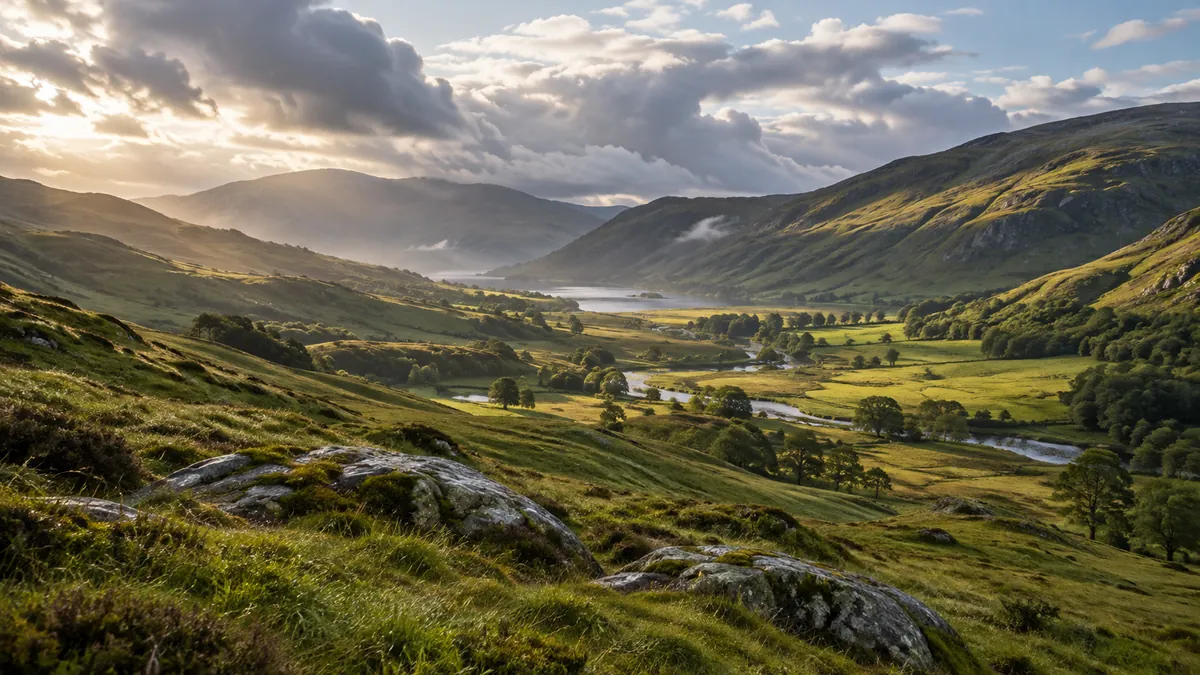
The best weather for landscape photography depends on the photograph you want to make. A calm reflection, a softly lit woodland and a dramatic sky ask for different conditions. Begin with the scene and then use the forecast to choose a suitable opportunity.
Match conditions to a photographic goal
- Reflections: investigate periods with lighter wind and inspect the actual water surface.
- Woodland detail: consider a composition that works without strong direct sunlight.
- Cloud texture: leave room in your composition for the sky rather than expecting a clear-day framing to suit it.
- Distant ridgelines: check visibility and consider how an obscured background would affect the scene.
- Warm light on terrain: verify that the Sun’s direction matches the face you want to photograph.
These are planning choices, not strict meteorological rules. The same weather can be useful for one composition and unsuitable for another. Keep a second idea that uses a closer subject or a different direction of view.
Fog is an opportunity with limits
The National Weather Service explains that radiation fog can develop overnight as air near the ground cools to saturation, especially in sheltered locations with little wind. See NWS: Radiation fog. That makes local terrain and the overnight forecast worth investigating, but it does not guarantee fog at your viewpoint.
Plan a legal place to stop and a composition away from moving traffic. If visibility is poor, do not turn an attractive possibility into an unsafe journey. A higher viewpoint may offer a different scene, but check access rather than assuming you can simply move uphill.
Read the forecast at the right scale
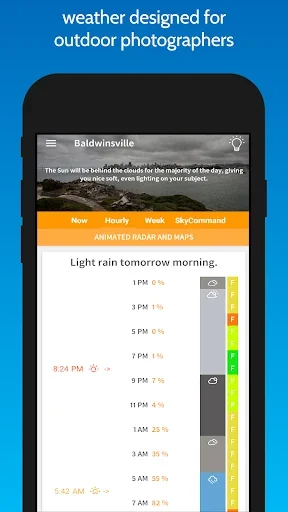
Compare hourly conditions for the shooting location and the travel route. Look at wind, cloud cover and precipitation timing separately. A daily summary can conceal a short useful window or a period that would make your setup impractical.
Recheck close to departure. Keep equipment protection ready and decide in advance which conditions would cause you to postpone. During the session, use the visible conditions to update your plan rather than trying to force the forecast’s earlier version of events.
Record what helped the photograph
Note the viewpoint, light direction, forecast and actual conditions alongside a few test images. A clear record of why a composition worked is more useful than labeling the whole day “good weather.” It also helps you return when a similar opportunity appears.
Explore Fotocast’s photography weather tools to build your next plan. Our outdoor photoshoot guide adds timing, backup locations and a practical decision checklist.