A weather-aware photoshoot plan gives you a primary idea, a workable alternative and a clear reason to postpone. The goal is to protect your available time while making room for forecasts to change.
Define what the shoot actually needs
Write down the subject, location, expected duration and type of light. Identify the conditions that would interfere: wind moving clothing, rain affecting equipment, low visibility hiding a background or direct sunlight reaching the scene at the wrong angle.
For a portrait, also consider the people involved: a comfortable waiting place, a short route to shelter and a realistic setup time. For a landscape, include access and the return journey. A usable photograph is only one part of a usable session.
Read hourly conditions instead of one icon
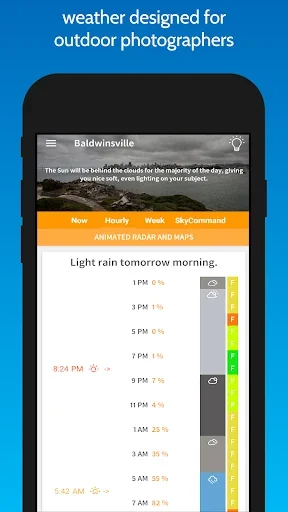
Check the forecast for the exact location and the full session, including setup. Compare precipitation, wind, temperature and clouds individually. A favorable daily summary may contain a less suitable hour at the time you intend to shoot.
The National Weather Service explains that precipitation probability refers to the chance of measurable precipitation at a point during a specified period. It does not say that rain will occupy that percentage of your shooting time. See NWS: What does probability of precipitation mean?. Check timing information alongside the percentage.
Choose a backup before you need it
- Identify a legal sheltered or indoor alternative with permission to photograph.
- Choose a second time window if the session can move.
- Prepare a composition that works with flatter light.
- Decide how and when you will communicate a change to participants.
- Set a final forecast-check time before anyone begins traveling.
Set a clear stop condition
Official warnings and dangerous conditions take priority over the photographic opportunity. National Weather Service NWS: Lightning safety guidance should inform your plan when thunderstorms are possible. A camera rain cover does not provide weather shelter for a person.
Make a simple written decision: proceed at the original location, move to the alternative or postpone. Review it again if conditions change during the session. This prevents a vague “we will see” plan from leaving everyone waiting outside.
Reserve time for the light
If the photograph depends on sunrise, sunset or twilight, include arrival and setup before that window. Read golden hour versus blue hour to distinguish the opportunities. Have your first composition ready instead of spending the best minutes searching for it.
Explore Fotocast’s photography weather planning tools and use this checklist to turn a forecast into a practical session. Review the result afterward and update your next plan with what you learned about the location.