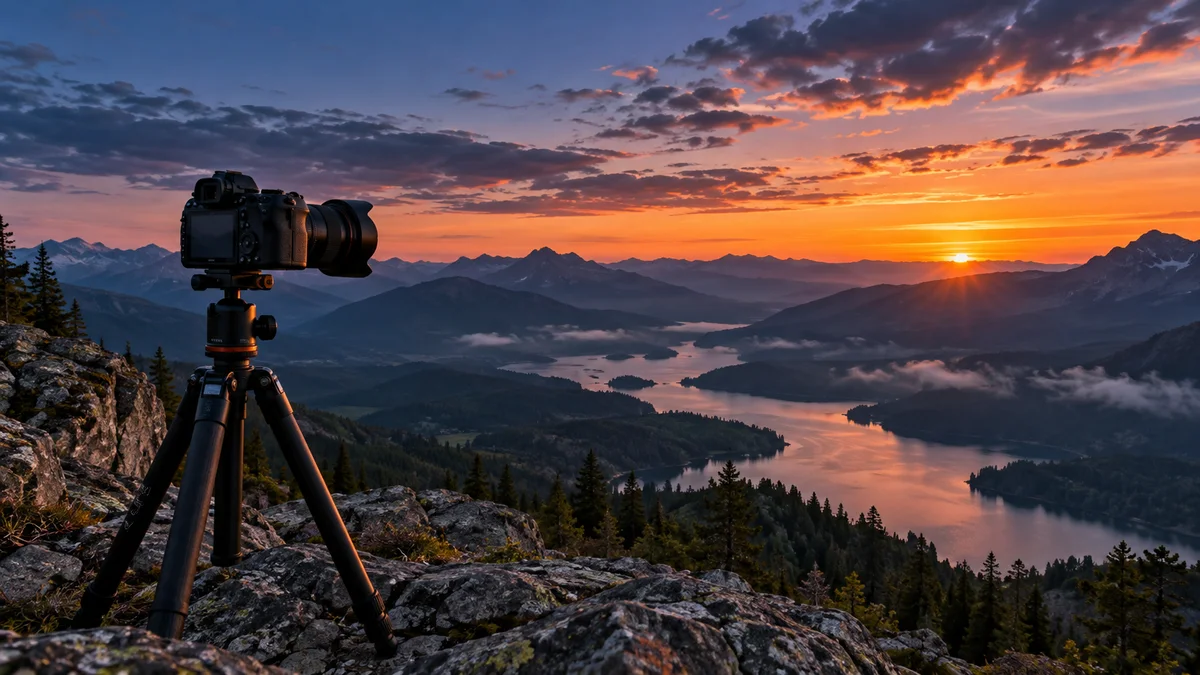
A time-lapse compresses a changing scene into a short sequence. Sunrise and sunset offer changing color, brightness and cloud movement, but they also demand a plan: the camera needs to be ready before the part of the event you want to show.
Choose the change you want to capture
Decide whether the sequence is about moving clouds, the sky becoming darker, light crossing a foreground or a combination. That choice determines how long the camera must stay in place and how often it should capture a frame. A dramatic single moment does not necessarily make the most coherent sequence.
SkyCandy’s daylight phases and sunrise/sunset forecasts help you choose the event and organize setup time. Its Sun direction planning helps you investigate where the light will move relative to the foreground. Those tools plan the outing; the phone or camera’s own recording functions produce the sequence.
Work backward from clip length
For an image-sequence workflow, playback duration equals the number of frames divided by playback frames per second. For example, 300 frames played at 30 frames per second produce a 10-second clip. At a five-second capture interval, those frames require about 25 minutes of recording. This is an illustrative calculation, not a recommended interval for every sunset.
Check how your camera defines the interval and handles exposure, processing and file writing. The intended gap must leave room for each frame to finish. Storage, power and the available light-change window also belong in the plan. A phone’s built-in time-lapse mode may manage playback differently, so test it before an important outing.
Match the interval to movement
Nikon’s time-lapse discussion explains that interval choice depends on the subject’s movement. Rapidly moving clouds may need a shorter interval than a slow scene. Use a short trial and review the result rather than copying one value because it worked in somebody else’s location.
Keep the composition stable unless deliberate camera motion is part of your plan. Decide how you will handle focus and white balance, and test whether automatic changes create distracting jumps. Fixed exposure can darken dramatically across sunset; automatic exposure can introduce inconsistent changes. Use your equipment’s supported approach and inspect the tradeoff.
Leave time for the transition
Arrive early enough to compose, test and begin recording before the desired change. If you want evening color flowing into blue hour, include that phase rather than stopping at the listed sunset time. Keep track of conditions while the sequence runs instead of leaving equipment unattended.
For example, prepare a 25-minute cloud sequence and a separate wider still image. If clouds move more quickly than expected, a trial can reveal whether the interval needs changing before the main capture. If rain arrives, stop or move to a protected alternative rather than letting the plan override equipment limits.
Questions about time-lapse planning
Does a high sunset forecast guarantee an interesting sequence?
No. A sequence also needs visible change and a coherent composition. SkyCandy helps assess the event; it does not evaluate the finished film.
Should I always record longer?
Record long enough for the transition you intend to show, while considering battery, storage and access. Extra duration without a clear subject does not automatically improve the result.
Explore SkyCandy on Google Play or SkyCandy on the App Store for current platform features and purchase options.