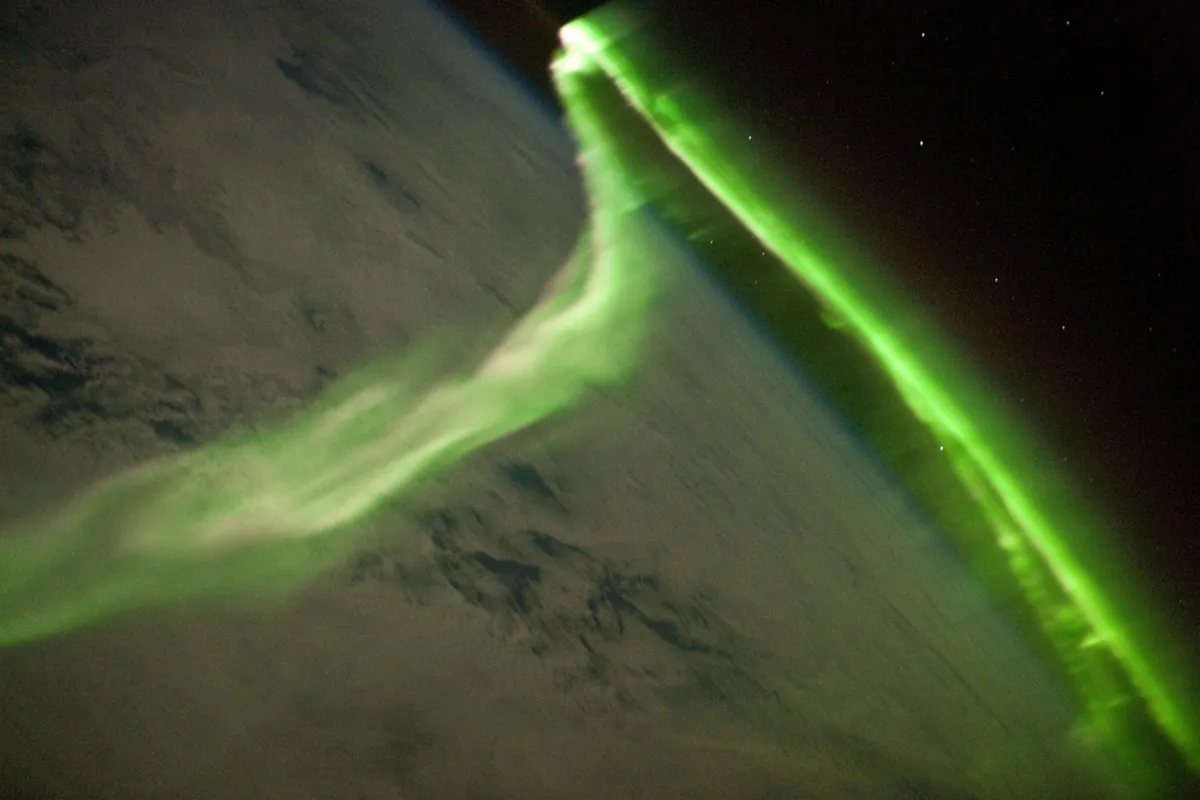
Seeing the northern lights requires several things to line up: auroral activity, a suitable location, darkness and an unobstructed sky. A strong forecast can justify checking conditions, but it cannot guarantee that you will see an aurora from your chosen spot.
Start with an official aurora forecast
NOAA describes geomagnetic activity, location, darkness and timing as key viewing factors. The planetary Kp index runs from 0 to 9 and provides context for geomagnetic activity; it is not a personal visibility score. See NOAA: Tips on viewing the aurora.
Check NOAA’s NOAA: Experimental aurora viewline forecast for geographical context. Read the forecast’s valid time and notes rather than sharing a map without its date. Being within a forecast viewing area still leaves local weather and viewing conditions to consider.
Find a usable horizon
In the Northern Hemisphere, start with a clear view toward the north, particularly when activity may remain low on the horizon. NOAA notes that an unobstructed northern view can matter for seeing distant aurora. A dark location behind a ridge may be less useful than a slightly brighter location with the right opening.
Scout the spot during daylight if you can. Identify parking, safe paths and a place to stand without obstructing a road. Confirm that nighttime entry is permitted. Avoid a plan that depends on finding an unfamiliar trail in the dark.
Check clouds and darkness together
Compare the hourly cloud forecast with the period you can actually be outside. A forecast for the nearest city may not describe a hilltop or coast accurately. Recheck shortly before leaving and keep a nearer backup if the primary location becomes cloudy.
Use our dark-sky location checklist to reduce interference from local lighting. Plan warm clothing and a reasonable return time, especially when waiting for activity that may never develop.
Use a flexible observing plan
- Check the current aurora forecast and its timestamp.
- Compare two legal locations with a clear northern view.
- Review clouds, visibility and travel conditions.
- Tell someone your destination and expected return.
- Reassess conditions on arrival rather than extending a trip simply because you have already traveled.
A photograph can look different from the view your eyes provide; do not use a vivid online image as a promise of tonight’s appearance. There is no universal Kp threshold that guarantees a sighting everywhere.
Explore Light Pollution Map’s aurora and dark-sky tools as part of your planning. Keep official NOAA information and current local weather in your decision-making process.