You cannot guarantee a colorful sunset, but you can make a better decision about when and where to watch. The most useful prediction routine combines a forecast with the sky you can see and a location that gives you a workable composition.
Understand what creates the color
Near sunrise and sunset, sunlight travels through a longer atmospheric path. Shorter wavelengths are scattered away more strongly, leaving warmer colors in the light reaching your view. The National Weather Service explains this in NWS: Why is the sky blue?.
That explanation does not translate into a simple rule such as “more clouds means more color.” Your forecast needs to be considered alongside the actual arrangement of clouds and the opening toward the setting Sun.
Build a repeatable decision routine
- Check the sunset time for your intended location and date.
- Review the cloud forecast around sunset, rather than only the daily weather icon.
- Look at the western horizon for an opening that could let low sunlight through.
- Choose a composition that can work even if the expected color never appears.
- Recheck the forecast and visible sky before leaving.
Arrive early enough to decide where to stand. Searching for a foreground at the moment the light changes leaves little time to notice the scene. Include a nearby alternative if your chosen viewpoint is blocked or crowded.
Think in possibilities, not promises
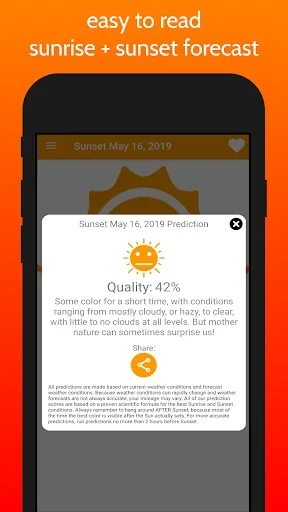
A sunset-quality forecast is a planning signal. It is not a measurement of the photograph you will get: trees, buildings, distant terrain and a changing cloud layer still affect your view. Avoid assigning a universal success percentage to your own outing unless a forecasting service explains exactly what its score means.
Keep short notes about the forecast, actual cloud appearance and final result. A small collection of local comparisons can help you identify which viewpoints are useful under different conditions without pretending it validates a forecasting model.
Have a second photographic idea
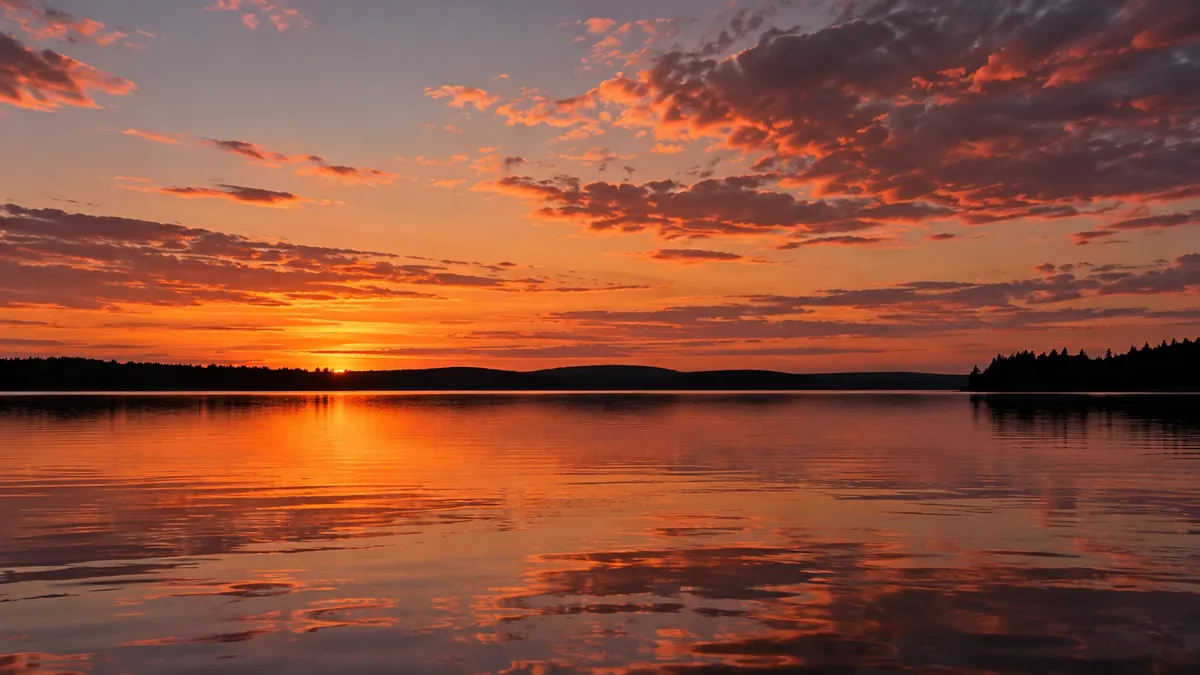
If the sky remains pale, consider silhouettes, reflections or a tighter composition. If cloud closes the horizon, work with the light you actually have rather than waiting for an imagined scene. Plan your return route before it becomes dark.
Explore SkyCandy’s sunrise and sunset forecasts to help decide when to investigate the sky. For the weather factors behind that decision, read our guide to colorful-sunset conditions; for shooting windows, compare golden hour and blue hour.