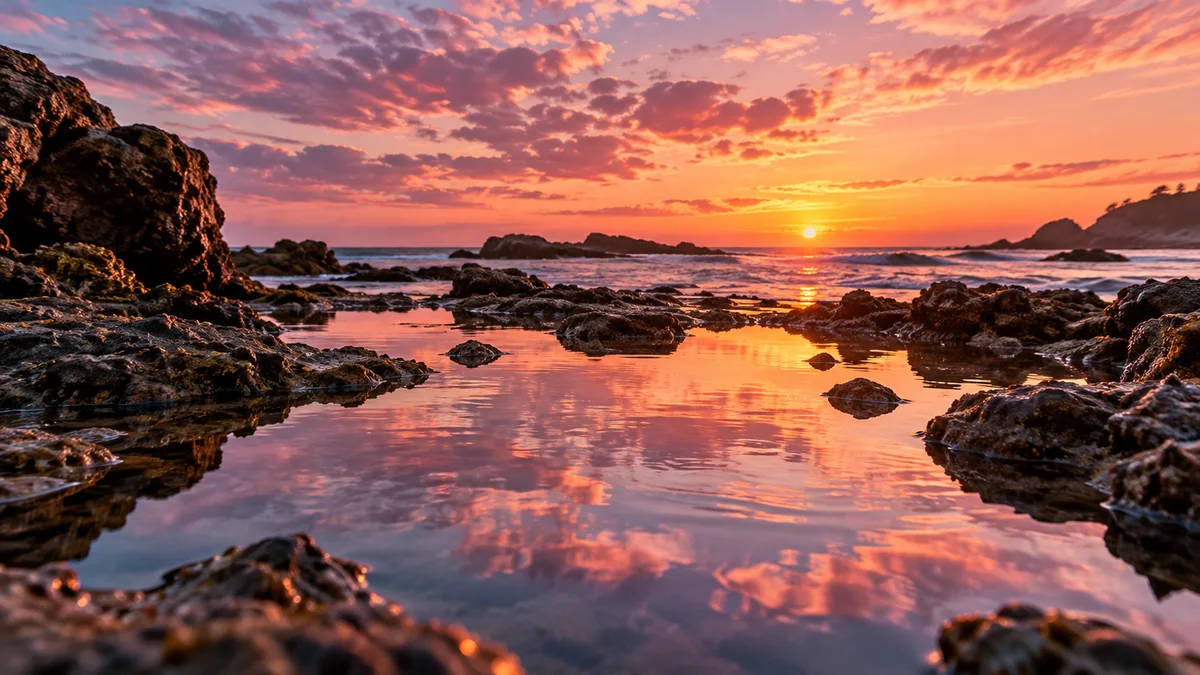
A colorful sky and a mirror-like reflection are two separate opportunities. You may get one without the other. Plan the sky using the light and forecast, then choose a water surface and viewpoint that can make a reflection part of the photograph.
Choose the surface before choosing a perfect sky
Look for an accessible lake margin, pond or small puddle with a useful background. A sheltered section can give a different result from the exposed center of a lake. Boats, wakes and ripples can change the scene even when the wider weather forecast seems favorable.
Nikon’s national-park photography advice identifies calm water as a starting point for clear reflections. Check the actual surface on arrival. If it is textured rather than smooth, decide whether bands of reflected color or a different subject would still make a worthwhile photograph.
Plan the light from the camera’s position
SkyCandy’s sunrise and sunset forecasts help choose a promising event, while its Sun direction and Daylight Phase Planning help organize the viewpoint and arrival. Save a favorite photo spot when you find a location worth revisiting.
A quality score does not predict whether a specific pond will stay still. If wind is central to the composition, also check the local weather; Fotocast’s photography weather tools can complement the sky plan. Neither app replaces seeing the surface in person.
Try two compositions instead of one rule
Make a balanced frame with the subject and its reflection, then try a tighter frame that makes the reflected color the main subject. A centered horizon can work when symmetry is deliberate. Check the edges for bright fragments, branches and shoreline distractions before concentrating only on the sky.
Nikon’s waterfront photography guide encourages considering reflections and the Sun’s position. Use that as a prompt to inspect more than one direction, rather than assuming the most colorful patch overhead gives the best reflected composition.
Balance brightness and movement
Review the sky and water separately in a test frame. The reflection may have different brightness from the direct scene. If the important highlights are clipped, adjust exposure or try a supported bracketing workflow. A longer exposure can change the appearance of moving water, but it cannot guarantee a detailed mirror of a rapidly changing sky.
For example, plan a lake visit with both a symmetric tree reflection and a close view of rippled color. If a boat crosses the scene, wait where access is safe or use the second composition. Avoid lowering the camera so far that stability, footing or equipment protection becomes uncertain.
- Scout water access and the return route.
- Check sky timing and direction in SkyCandy.
- Inspect wind and the actual surface.
- Test brightness and keep an alternative composition.
Questions about photographing reflections
Should I always use a polarizing filter?
No. A polarizer changes reflections, so evaluate its effect on the reflection you want to keep. The correct choice depends on the scene, angle and creative goal.
Is morning always calmer than evening?
Do not treat that as a location-specific forecast. Check the conditions for the planned session and compare repeat visits. Our wind-planning guide helps separate wind decisions from sky-color decisions.
Explore SkyCandy on Google Play or SkyCandy on the App Store for current platform features and purchase options.