Rain does not automatically cancel every photo idea, but it changes the logistics. A successful plan identifies what you can photograph from a protected position, how you will care for the equipment and when conditions would make the session unsuitable.
Read the rain probability for the actual period
A rain percentage is not the fraction of the day that will be wet. The National Weather Service explains that precipitation probability refers to the chance of measurable precipitation at a point over a specified period. Read the hours and location before treating the percentage as a decision.
Then inspect the forecast amount, timing and any available radar information. A brief shower and persistent rain can have the same broad “rain” icon but create very different opportunities. Radar helps show precipitation patterns; it does not prove that a protected viewpoint will stay dry for the exact length of your session.
Choose a subject that works from shelter
Consider reflected street lights viewed from a lawful sheltered position, details after rain has passed or an indoor composition that includes weather through a window. Keep your foreground reachable without standing in flowing water or blocking a walkway.
If shelter is part of the plan, confirm what it actually protects against. A roof can reduce ordinary rain exposure, but an open-sided shelter is not a safe substitute for a substantial enclosed building or appropriate vehicle during lightning. Follow official lightning guidance if thunder occurs.
Match equipment protection to the camera
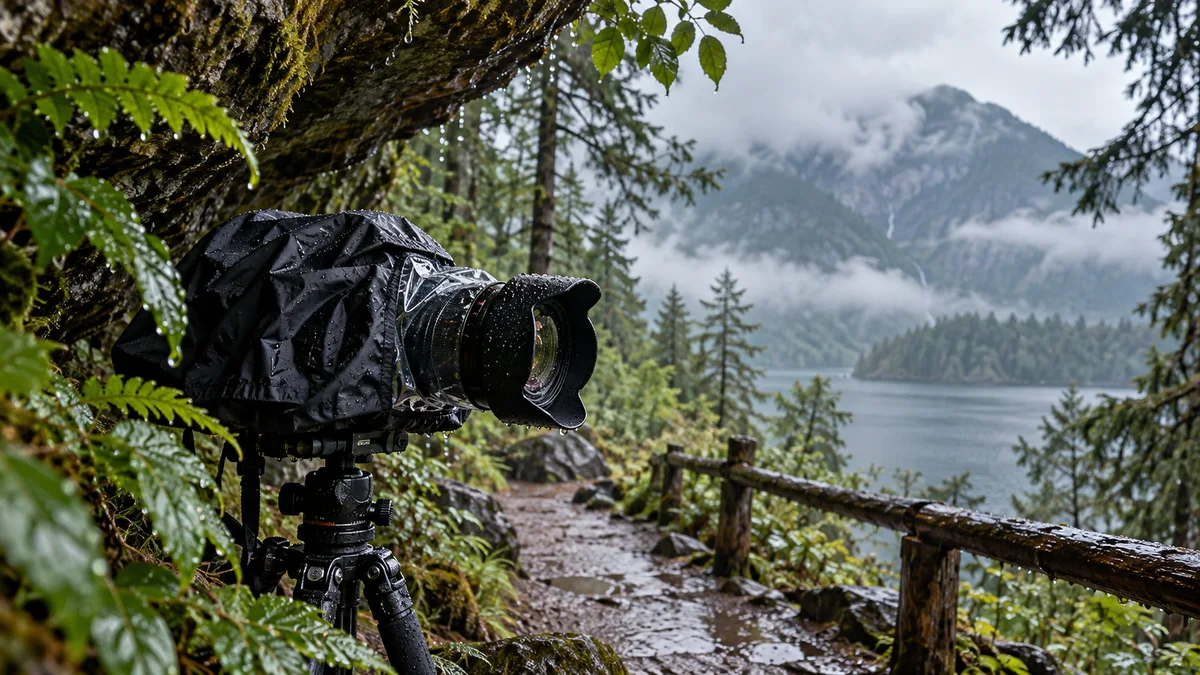
Read your manufacturer’s limits for the body and lens you will use. Prepare protection and a way to pack equipment while it is still manageable, not after everything is wet. Keep lens changes to a protected environment and inspect the front element for drops before blaming softness on focus.
Do not assume a forecast score, rain cover or weather-sealed component makes every exposure safe. The objective is to use a workable viewpoint and suitable gear, not to test how much rain the equipment will tolerate.
Organize the session in Fotocast
Fotocast provides photography weather, session management, radar and alert tools. Use those features to compare the session window and keep a backup location in the plan. Its Android listing limits minute-by-minute precipitation coverage to the USA, UK and parts of Canada; do not assume that feature is available everywhere or in every platform edition.
For example, plan a protected urban detail session for the wet period and a short nearby walk only if conditions improve. Recheck before changing location. If access becomes unsafe, use the indoor plan rather than continuing because the camera is already packed. The NWS flood guidance explains why entering floodwater is not a reasonable photography workaround.
Questions about rainy photoshoots
Can I rely on the daily rain icon to choose a two-hour shoot?
Use an hourly window and current updates where available. Our hourly-versus-daily forecast guide explains the distinction.
Does a low rain chance mean I can leave protection behind?
It is a forecast, not a guarantee. Decide what to pack based on the equipment’s needs, exposure to weather and consequences of a change.
Explore Fotocast on Google Play or Fotocast on the App Store for current platform features and purchase options.